

When I meet with clients, we do a run-though of their consumption of certain foods and always ask about sugary foods and sweets. When the topic comes up, responses I hear go one of two ways: “Oh ya, I have a sweet tooth. ” or “I don’t care much for sweets, I don’t eat a lot of sugar”.
Just because cakes, cookies and candy aren’t part of your diet, doesn’t necessarily mean that you’re in the green regarding added sugar intake. In fact, most people are surprised to learn just how much added sugar their diet can actually pack. So today, I want to shed light on added sugars in foods and more specifically, about where and how to find them.
How much is too much?
The AHA recommends that women cap their added sugar intake at 100 calories (6 teaspoons) per day and men at 150 calories (9 teaspoons) per day. But here’s the thing: sugars add-up quickly. 1 can of soda, for instance, clocks in at 8 teaspoons, which means that you’ve already broken the bank if you’re a woman.
Where do we find them?
Major sources include:
- Soft drinks
- Candy
- Cakes, cookies and pies
- Fruit drinks or cocktails
- Ice cream and frozen desserts
Other (less obvious) sources include:
- Sweetened yogurts
- Sweetened dairy and non dairy milk
- Ready-to-eat cereal
- Cereal bars
- Condiments, sauces and salad dressings
- Bread
- Peanut butter
Again, even if you steer clear of sweets and treats, your sugar intake might still miss the mark if your diet is made of many processed or packaged foods.
For fun, and to put this in perspective, I put together a sample day containing healthy sounding foods clients often question me about, to demonstrate just how quickly those sneaky sugars can add-up.
Breakfast
1 cup low-fat cereal (Special K* Satisfaction cereal) Sugars = 10 g
Morning snack
1 cereal bar (Quaker oatmeal to go brown sugar cinnamon) Sugars= 19 g
Lunch
Grilled chicken salad
2 tablespoons store-bought salad dressing (Kraft’s Light Raspberry) Sugars = 5 g
20 oz bottle Vitamin water Sugars = 31 g
Afternoon snack
175 g low-fat yogurt (Yoptimal stirred) Sugars = 24 g
Supper
Pasta with 1/2 cup store-bought pasta sauce (President’s choice original) Sugars= 10 g
Night time snack
Low-calorie dessert (Skinny cow chocolate truffle bar) Sugars = 14 g
Total*= 113 g or approximately 28 teaspoons
*This total does not distinguish naturally occurring from added sugars. However, even when taking into account natural sugars (here present in the yogurt, tomato sauce and the ice cream bar (if any)), we still reach a total upwards of 90 g or approximately 22 teaspoons. Still missing the mark.
The ultimate solution to reducing added sugar intake is to base your diet on whole foods, giving you ultimate control on the amount of sweetness your tastebuds need. But, if you’re curious about which products contain the most added sugars in your diet, here is one simple thing to do:
Read those ingredient lists
We can only do better, when we know better. And if you really want to uncover the sources of added sugar in your diet, ingredient lists are your best bet. Especially since the nutrition facts table displays sugars, which do not distinguish those that are naturally ocurring (from fruit, vegetables and dairy) from those that are added, which are the major problem.
The ingredient list on the other hand, displays ingredients in decreasing order of importance, by weight. So, depending on where sugar ranks in the list, you can get a better idea of it’s importance in the product.
Avoid foods where sugars are listed at top of the list OR listed many times throughout the list, since it isn’t uncommon for a food to contain more than one (or 5…) sweeteners. Take for instance this low-fat breakfast cereal:

Now as you can see, sugar does hide behind many names so to alleviate the detective work for you, here is a list of common names for added sugars in foods.
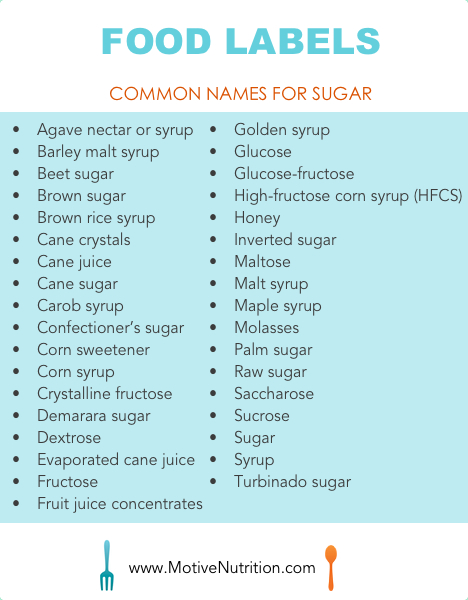
Also, I recently did this segment with the lovely people at Global Montreal on the topic of added sugars, so you can click the link for more tips on how to cut down!
And finally, some parting words with a very à propos quote:
“Eat less sugar, you’re sweet enough already” – Anonymous.
Are you working towards cutting down added sugars in your diet? What do you find the most challenging?





Hey Vanessa!
For the most part I eat a relatively healthy plant based diet. However, my one looming vice is sugar! This article on added sugars is great! Super informative. I’m very diligent about reading labels for added sugars, yet I cave over and over when it comes to chocolate, candy, cakes….I can’t kick my sweet tooth. I have tried to give up sugar in the past, and have had withdrawal symptoms like shakes, fever and headaches – crazy!
Could you post some advice on how quit it?
Hayley.
Hayley, sugar cravings are such a common issue and it those “withdrawal” symptoms usually result from drastic cuts. What usually works best is a gradual cut down, giving your tastebuds time to readjust, and using other naturally sweet foods like fruit, in place of sugar to get you through a craving. I did write this post getting over sugar cravings that might help you out. But will definitely touch on the topic again soon!
Yet again, another great post!
I get that from patients a lot…”I don’t eat much sugar or sweets'”… but come to find out that they end up eating foods that sneakily have them in there.
Thanks Kristen, it’s incredible how quickly they can add-up. People don’t seem to look at sugar as much as they do fat content, so it’s important to talk about how sneaky they can be.